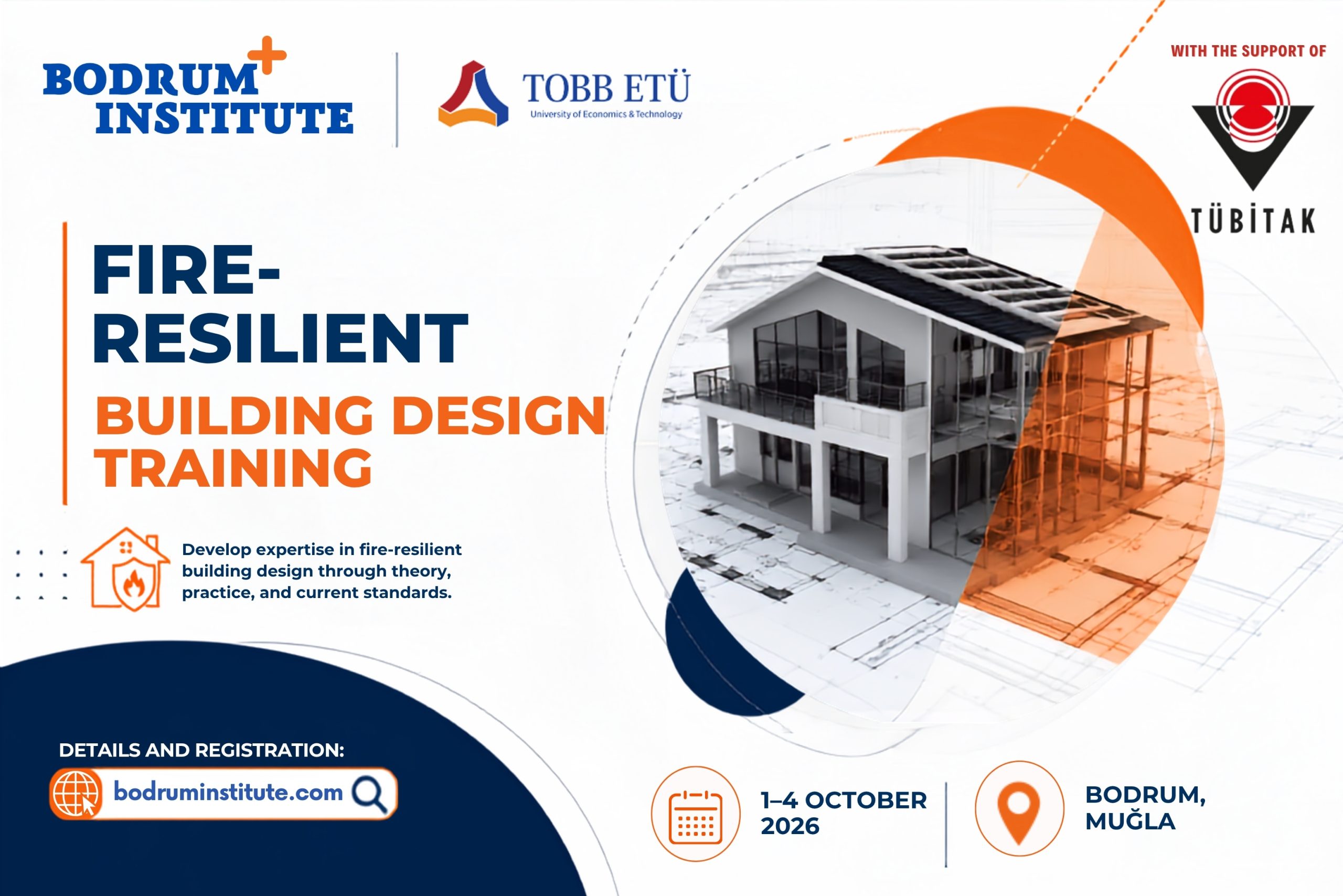
Fire-Resilient Building Design Training
Event Coordinator: Assistant Professor Dr. Zelal Çınar
Bodrum/TÜRKIYE
1–4 October 2026
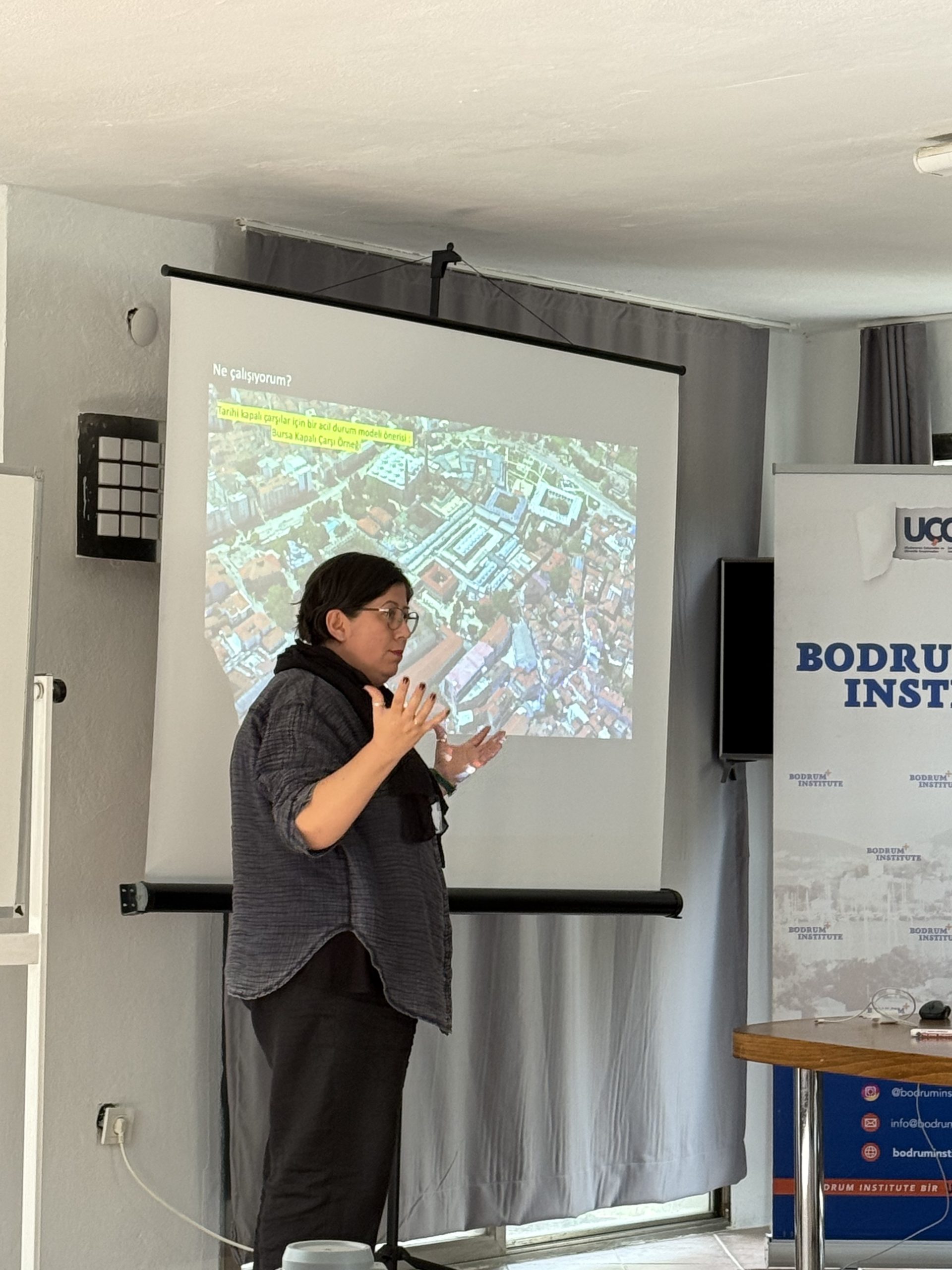
Organized by the Bodrum Institute, the Fire-Resilient Building Design Training was held from 1 to 4 October 2026 at the Gümüşlük Academy Foundation in Muğla, Türkiye. The training addressed the integration of fire safety into the early stages of architectural design, the implications of fire safety regulations for the design process, and architectural approaches to reducing fire risks across different building typologies. Bringing together graduate students and early-career researchers, the event explored performance-based fire safety, evacuation scenarios, spatial organization, and digital assessment tools within an interdisciplinary framework.
Photos from the training are available in the gallery at the bottom of the page.
˜
Fire-Resilient Building Design Training: Call for Applications
Fire safety in architectural design is not merely a technical subfield of the building production process; it is a multidisciplinary challenge that directly shapes the conceptual framework of design itself. Recent literature highlights that fire risks are largely determined by spatial, functional, and design decisions made during the early stages of the design process. In this context, key design considerations—including the layout of escape routes, the configuration of fire compartments, building form, massing, and material selection—play a critical role in protecting life and property.
Major building fires in recent years, together with the increasing complexity of building typologies, have demonstrated the limitations of approaches that address fire safety solely through engineering solutions. Where performance-based approaches are not integrated into the architectural design process, spatial safety may remain inadequate even when formal compliance with applicable regulations has been achieved. This underscores the need to incorporate architects’ knowledge of fire safety and their understanding of relevant regulations into the earliest stages of design.
The training aims to promote an approach in which fire safety is treated not as a reactive technical requirement, but as a strategic design consideration that shapes architectural decisions from the outset.
Key Themes
Design challenges encountered when developing architectural projects in compliance with fire safety regulations, including the Regulation on the Protection of Buildings from Fire and relevant guidelines, and the relationship between these challenges and spatial and functional decisions made during the early design stages.
The influence of fire safety requirements on spatial organization, planning decisions, building form, and massing during conceptual and schematic design.
Planning, design, material selection, and construction-related issues that increase fire risks, together with architectural approaches to preventing these risks at the earliest stages of the design process.
Performance-based fire safety design, scenario-based assessments, simulation techniques, and the integration of digital tools into architectural design.
Fire safety strategies across different building typologies, including residential, public, mixed-use, and high-rise buildings, with particular attention to occupant behaviour, evacuation scenarios, and emergency performance.
Who Can Apply?
This training programme is intended for graduate students and early-career researchers seeking to integrate building design and fire safety into their academic research or professional practice through an interdisciplinary approach. Applicants must meet the following eligibility criteria:
- Applicants must be currently enrolled in a master’s or doctoral programme in architecture or a related engineering discipline at a university in Türkiye.
- Early-career researchers who have completed a doctoral degree in the relevant fields may also apply, provided that no more than ten years have elapsed since the award of their degree.
- Employment requirement for doctoral graduates only: Applicants who have completed their doctoral studies must currently be employed at a university, a training and research hospital, a research institute, or an R&D organization. This requirement does not apply to master’s or doctoral students.
- All applicants must be registered in TÜBİTAK ARBİS (Researcher Information System).
Evaluation and Selection Process
Applications will be evaluated by the Scientific Committee based on the applicants’ up-to-date CVs and statements of purpose submitted through the application system.
The statement of purpose must not exceed two pages and should outline the applicant’s research project, including its title, objectives, relevant literature, methodology, expected outputs, and original contribution. Applicants should also specify the theme of the training they wish to engage with.
The programme is limited to 15 participants. Selected participants are required to attend all training sessions, except in cases of force majeure.
Participation Costs
The expenses of participants and instructors, including accommodation, meals, stationery, and related costs, will be covered under TÜBİTAK’s 2237-A Scientific Training Activities Support Programme. Participants are responsible for arranging their transportation to the Gümüşlük Academy Foundation, the venue of the training. Transportation support will also be provided under the TÜBİTAK 2237-A programme.
For the event information pack and further details, please refer to the relevant buttons at the bottom of the page.
Event Language: Turkish
| | Name | Title | Organization |
| Organizing Committee | Zelal Çınar | Assist. Prof. Dr. | TOBB ETÜ |
| Füsun Demirel | Prof. Dr. | Gazi University |
| Sedat Altındaş | Assoc. Prof. Dr. | Bolu Abant İzzet Baysal University |
| Tahsin Turğay | Assoc. Prof. Dr. | Sakarya University |
| Zuhal Şimşek | Assoc. Prof. Dr. | Bursa Uludağ University |
| Hakan Serhad Soyhan | Prof. Dr. | Sakarya University |
| | | | |
| Scientific Committee | Füsun Demirel | Prof. Dr. | Gazi University |
| Tahsin Turğay | Assoc. Prof. Dr. | Sakarya University |
| Sedat Altındaş | Assoc. Prof. Dr. | Bolu Abant İzzet Baysal University |
| Zuhal Şimşek | Assoc. Prof. Dr. | Bursa Uludağ University |
| Tayyibe Nur Çağlar | Prof. Dr. | TOBB ETÜ |
| Atakan Acar | Assoc. Prof. Dr. | TOBB ETÜ |
| Semra Arslan Selçuk | Prof. Dr. | Gazi University |
| Arzu Gönenç Sorguç | Prof. Dr. | ODTÜ/METU |
| Leman Figen Gül | Prof. Dr. | İTÜ/ ITU |
| Hakan Serhad Soyhan | Prof. Dr. | Sakarya University |
| Recep Görgülü Arslan | Assoc. Prof. Dr. | TOBB ETÜ |
| | | | |
Local Organizing Committee | Haldun Yalçınkaya | Prof. Dr. | TOBB ETÜ |
| Başar Baysal | Assoc. Prof. Dr. | Ankara Social Sciences University |
| Orçun Demir | Dr. | TOBB ETÜ |